Appalachia
Hillbilly ElegyAppalachia is one of the two formative settings of J.D. Vance’s life and the regional frame through which his memoir explores poverty, family instability, and unequal opportunity. He grew up between Jackson, Kentucky, an Appalachian town, and Middletown, Ohio, a Rust Belt city; the book treats these places as distinct but connected parts of a working-class world where family and community can narrow a young person’s prospects—or help widen them.
Place and the memoir’s perspective
The account of Appalachia begins with lived experience rather than a detached regional survey. Vance places his childhood in Jackson alongside his years in Middletown, and uses that movement between places to consider what was shared by his family, neighborhood, and wider community. His observations prompt questions about patterns he had witnessed among neighbors as well as within his own family. The region matters not simply as a backdrop, but as a place from which he tries to understand why hardship recurs and why escape can be difficult. At sixteen, Vance read William Julius Wilson’s The Truly Disadvantaged, a study of Black communities in inner cities. Wilson described communities formed around factory work that became fragile when factories closed: those able to leave did so, while people who remained faced fewer good jobs and weaker networks of support. Vance recognized an unsettling parallel with the Appalachian families he knew, although Wilson was not writing about them. He found a similar resonance in Charles Murray’s Losing Ground, which examined welfare policy and social decay. These books offered useful ways to think, but neither fully explained his family’s experiences. The memoir presents Appalachia through this act of comparison while acknowledging that no single study or field could account for its problems.
Opportunity and the pressures of place
The book situates Appalachia within a larger geography of uneven opportunity. A study by economists including Raj Chetty found that poor children’s chances of rising through the American meritocracy vary sharply by location. Vance notes that opportunity remained strong in places such as Utah, Oklahoma, and Massachusetts, while children in the South, the Rust Belt, and Appalachia faced greater difficulty. The contrast makes geography consequential: the promise of the American Dream is not distributed evenly across the country. The researchers identified the prevalence of single parents and income segregation as important factors in that unevenness. Vance connects those findings to everyday examples: growing up among many single-parent households and poor neighbors can limit the range of futures a child sees. Without adults who model the value and consequences of education and steady work, possibility can become harder to imagine, much less reach. His comparison between Utah and Ohio emphasizes the role of strong community ties, integrated neighborhoods, and intact families; it is not a claim that one place alone explains every outcome. The memoir also gives a broader working-class context for childhood adversity. It cites research showing that adverse childhood experiences are more common among working-class people: well over half had experienced at least one, and about 40 percent had experienced multiple instances, compared with 29 percent of people outside the working class. These figures are not presented as Appalachia-specific statistics. They help frame the memoir’s account of how hardship accumulates in families and communities, while resisting the idea that such experiences belong to one region alone.
Family ties as a counterweight
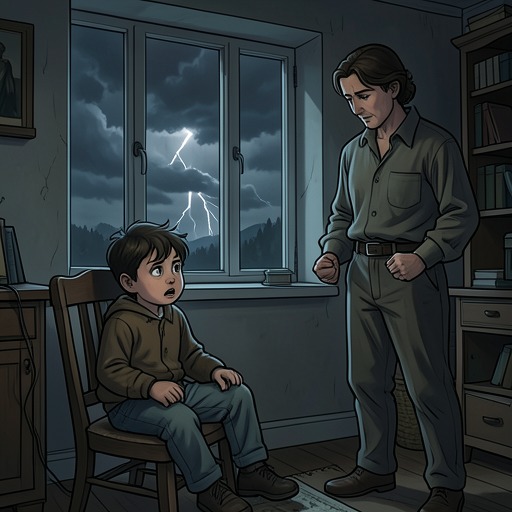
Against the pressures associated with poverty and isolation, Vance emphasizes the importance of people who provide practical care and examples of another way to live. Mamaw and Papaw remained a constant presence even when Vance’s mother and stepfather moved away. His sister Lindsay protected him, and Aunt Wee and Dan opened their home when he was afraid to ask for help. Their marriage also gave him an early example of a loving and durable relationship. Teachers, relatives, and friends added further support. These relationships are not incidental to the regional account: they show how personal networks can supply some of what an isolated community lacks. A memory of a secret phone line makes that support concrete. Papaw installed it at the bottom of Vance’s toy box so Lindsay could call Mamaw and Papaw if the household became too chaotic. Recalling this alongside his mother’s addiction, his poor performance in his first year of high school, and the time he spent with Lindsay while their mother was in treatment, Vance recognizes how close his childhood came to disaster. The memoir’s account of Appalachia therefore holds constraint and intervention together: family instability is real, but so is the difference a reliable adult can make.
Limits, change, and continuing need
Vance does not claim that public policy can solve every problem associated with family, faith, and culture. He describes a friend’s advice as a more modest aim: people may not be able to fix these conditions, but they can help tip the balance for those at the margins. His own life, he argues, depended on many forms of assistance arriving at crucial moments. The image of a scale gives the region’s social conditions a practical dimension: support may not erase hardship, but it can change what happens to an individual within it. A later lunch in Appalachian Kentucky brings the question of continuing need into view. Vance meets Brian, a young man whose mother has become involved with narcotics and whose relationship with his father is complicated. Brian is polite and quiet, but he hesitates before asking for more french fries because he is hungry. The scene moves from regional analysis to a particular, modest need; in 2014, in what Vance calls the richest country on earth, the young man still feels uncomfortable asking for enough food. Appalachia in the memoir is thus neither a shorthand for personal failure nor an abstract policy problem. It is a lived setting where structural disadvantage and family history matter, and where support can make a decisive difference without making the underlying need disappear.